


Article
Speech vs. ABA Therapy: What Is the Difference?
Every child develops at their own unique pace, reaching milestones in their own time. However, when parents notice delays in communication, social interactions, or daily living skills, they often seek professional guidance to support their child's growth. Early intervention plays a critical role in addressing developmental delays, providing children with the tools they need to succeed during their most formative years. Accessing the right type of support early on can make a tremendous difference in a child's long-term development.
The Pediatric Therapy Center, located in Albertville, AL, is dedicated to creating a nurturing and engaging environment for children who need extra support. The clinic offers a comprehensive range of services, bringing speech therapy, occupational therapy (OT), physical therapy (PT), and Applied Behavior Analysis (ABA) under one roof. By combining playful and structured therapy activities, the clinic helps children enhance their communication, feeding, motor, regulation, and social skills.
For parents navigating the world of pediatric therapy for the first time, the terminology can feel overwhelming. Two of the most commonly recommended interventions are Speech Therapy and ABA Therapy. While both approaches share the ultimate goal of helping children reach their full potential, they focus on different aspects of development and use distinct methodologies. Understanding the differences between these two therapies is the first step in giving your child the targeted help they need.
Understanding Speech Therapy
When people hear the term "speech therapy," they often assume it only addresses stuttering or a lisp. In reality, this discipline encompasses a much broader range of skills necessary for effective communication and safe feeding.
What is Speech Therapy?
Speech therapy is a specialized intervention designed to evaluate and treat communication disorders and swallowing difficulties. Speech-Language Pathologists (SLPs) work with children to improve their ability to understand language, express their thoughts, and use their oral muscles effectively. This therapy focuses on the mechanics of speech, the cognitive aspects of communication, and the physical coordination required for eating and drinking.
Who Can Benefit from Speech Therapy
Children facing a variety of challenges can see significant improvements through speech therapy. This includes children who have difficulty articulating sounds, those who struggle to understand spoken language (receptive language delays), and those who have trouble putting words together to express their thoughts (expressive language delays). Additionally, children who experience social communication challenges, such as difficulty making eye contact or taking turns in conversation often benefit from the guidance of a speech therapist. Speech therapy is also crucial for children experiencing swallowing disorders or feeding aversions, ensuring they can eat safely and comfortably.
How Speech Therapy Helps
The primary objective of speech therapy is to give children a voice. SLPs are highly trained in early language acquisition, speech sound therapy, and the implementation of picture communication systems or augmentative and alternative communication (AAC) devices. By targeting specific linguistic and cognitive skills, speech therapy empowers children to convey their distinctive messages to the world. It also improves social progress by teaching children how to interact with peers appropriately. For children with feeding difficulties, therapy strengthens the oral muscles and improves coordination, which enhances overall swallowing proficiency.
Playful and Structured Activities
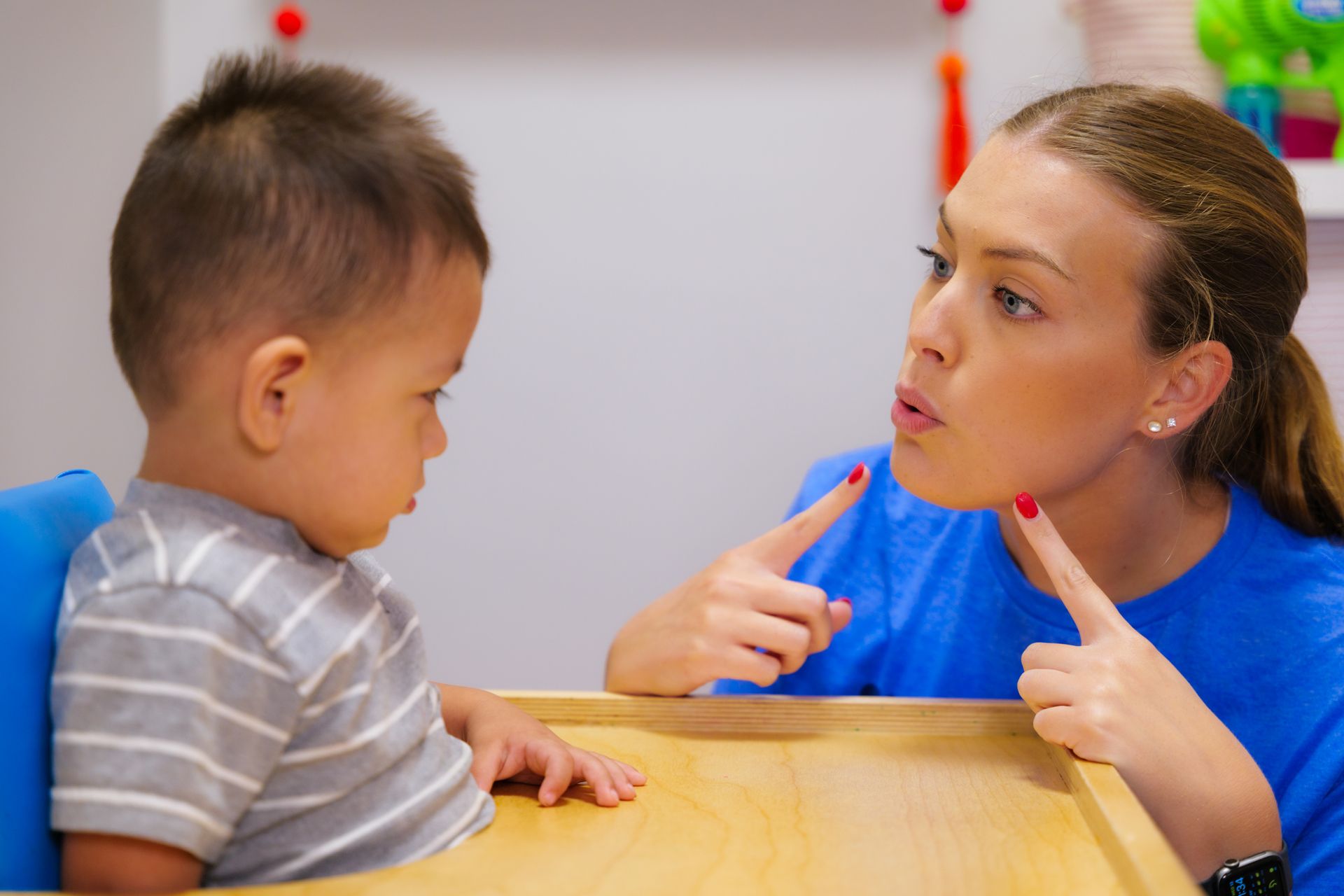
Pediatric speech therapists know that children learn best when they are having fun. Sessions are carefully crafted to integrate learning opportunities into a child's favorite activities. A therapist might use board games to encourage turn-taking and verbal requests, or engage in floor play with building blocks to practice specific speech sounds. By blending structured exercises with play-based learning, therapists keep children motivated and engaged throughout the treatment process.
Understanding Applied Behavior Analysis (ABA) Therapy
While speech therapy focuses heavily on communication and oral motor skills, ABA therapy takes a different approach to child development. It is widely recognized as a primary treatment for individuals diagnosed with autism, offering a highly structured framework for behavioral improvement.
What is ABA Therapy?
Applied Behavior Analysis (ABA) is an evidence-based intervention recognized and endorsed by the US Surgeon General and the American Psychological Association. It involves the application of psychological principles to understand and improve human behavior. In a clinical setting, a licensed Board Certified Behavior Analyst (BCBA) designs, implements, and oversees the ABA treatment plan, ensuring that all interventions are scientifically supported and tailored to the individual child.
Who Primarily Benefits from ABA Therapy
ABA therapy is most commonly associated with children who have a diagnosis of Autism Spectrum Disorder (ASD). Children with ASD often face unique challenges related to social communication, sensory processing, and behavioral regulation. ABA therapists work closely with these children to help them gain specialized developmental skills, enabling them to participate more fully in their daily living activities.
Core Principles of ABA
The foundation of ABA therapy lies in its evidence-based methodology. One of the core principles is the use of positive reinforcement. When a child demonstrates a desired behavior or successfully completes a task, they receive a reward, such as praise, a preferred toy, or a brief playtime. This positive reinforcement encourages the child to repeat the adaptive behavior in the future. Simultaneously, ABA techniques work to deter maladaptive behaviors, helping children find safer and more appropriate ways to express their needs and frustrations.
Goals of ABA Therapy
The overarching goal of ABA therapy is to help children become the best versions of themselves by increasing their independence and functional skills. Highly skilled therapists assist children in mastering early functional skills, such as toileting, dressing, and writing. Therapy also focuses on the formation of friendships and the nurturing of positive relationships. Furthermore, ABA provides children with effective coping mechanisms to manage behavioral challenges and prepares them for real-world situations, such as tolerating haircuts or navigating the grocery store.
Signs a Child May Benefit from ABA Therapy
Parents might wonder if their child is a candidate for ABA therapy. Several key signs indicate that a child could benefit from this intervention:
- Repetitive Behaviors: Engaging in repetitive actions like hand flapping, spinning, or rocking. ABA helps introduce alternative behaviors and coping mechanisms.
- Socialization Challenges: Struggling to develop friendships, socialize in groups, or interpret social cues.
- Learning Delays: Experiencing developmental delays that hinder the learning process. Targeted ABA interventions help bridge these gaps.
- Behavioral Issues: Displaying aggression, self-injury, or frequent tantrums. ABA teaches children acceptable ways to manage their emotions and communicate their distress.
Key Differences Between Speech and ABA Therapy
While both therapies strive to improve a child's quality of life, they operate through different lenses and utilize distinct techniques.
Primary Focus and Goals
The primary focus of speech therapy is communication and oral motor function. Its goals revolve around articulation, language comprehension, social communication, and safe swallowing. In contrast, the primary focus of ABA therapy is behavior modification and skill acquisition. Its goals are centered on increasing adaptive behaviors, reducing maladaptive behaviors, and fostering daily living skills.
Target Populations
Speech therapy serves a broad population of children dealing with varied linguistic, cognitive, and physical challenges. A child does not need an autism diagnosis to benefit from speech therapy. ABA therapy, however, is specifically designed and predominantly utilized for children diagnosed with Autism Spectrum Disorder, addressing the specific behavioral and developmental hurdles associated with the condition.
Methodologies and Techniques
Speech therapists rely on linguistic exercises, vocal modeling, articulation drills, and play-based language games. They might use mirrors to show a child how to position their tongue or use AAC devices for non-verbal children. ABA therapists rely on data collection, task analysis, and positive reinforcement. They break down complex skills into small, manageable steps and systematically reward the child as they master each increment.
How They Complement Each Other
Because a child's developmental needs are rarely isolated to a single area, speech and ABA therapies often overlap and complement one another beautifully. A child might learn the mechanics of forming words in speech therapy, while their ABA therapist reinforces the consistent use of those words during daily routines. Together, they create a comprehensive support system that addresses both the ability to communicate and the behavioral motivation to do so.
The Collaborative Approach at The Pediatric Therapy Center
Treating a child's developmental delays requires more than just a single specialist; it requires a coordinated team effort. The Pediatric Therapy Center champions this multidisciplinary approach, ensuring that all aspects of a child's growth are nurtured simultaneously.
A Multidisciplinary Team
The clinic houses a diverse group of highly trained developmental specialists, including Speech-Language Pathologists, Physical Therapists, Occupational Therapists, and ABA Therapists. This proximity allows for seamless communication between professionals who are working with the same child.
Collaborating to Achieve Holistic Goals
At The Pediatric Therapy Center, ABA therapists collaborate directly with your child's occupational therapist, speech therapist, and physical therapist. This family-oriented approach ensures that everyone is on the same page. If an occupational therapist is working on a child's fine motor skills for writing, the ABA therapist can reinforce those exact skills using positive reinforcement strategies during their sessions. This alignment optimizes outcomes and accelerates the child's progress.
Personalized Treatment Sessions
Every child is unique, which is why the clinic prioritizes customized care. Therapists offer personalized individual sessions to focus deeply on specific challenges. They also facilitate group sessions to help children practice social interactions in a controlled environment. When appropriate, co-treatment sessions, where two different therapists work with the child simultaneously are utilized to address complex, overlapping goals efficiently.
The Benefits of Integrated Therapy for Children
When children receive comprehensive, collaborative care, the results speak for themselves. An integrated therapy approach yields numerous long-term advantages for the child and their family.
Improved Overall Development and Skill Acquisition
By addressing communication, physical limitations, and behavioral challenges concurrently, integrated therapy facilitates rapid skill acquisition. Children learn how to navigate their environment safely, communicate their needs clearly, and regulate their emotions effectively.
Enhanced Independence and Quality of Life
The ultimate reward of pediatric therapy is seeing a child gain independence. Whether it is learning to dress themselves, communicating a complete thought without frustration, or playing cooperatively with a sibling, these achievements drastically enhance the child's daily quality of life and boost their self-confidence.
Preparation for Real-World Situations
Therapy is not just about succeeding inside the clinic; it is about thriving in the real world. By integrating therapy goals into daily routines and practicing scenarios like grocery shopping or attending school, therapists ensure that children are prepared to handle the unpredictability of everyday life with resilience and adaptability.
Getting Started with The Pediatric Therapy Center in Albertville
Taking the first step toward pediatric therapy can feel daunting, but the team at The Pediatric Therapy Center makes the process straightforward and supportive for families.
Evaluations and Qualifying for Services
If you have concerns regarding your child's development, the first step is to contact your physician for a referral. Once the clinic receives the referral, they will schedule a consultation. For services like ABA, children are assessed using insurance-directed evaluations to qualify for care. During the initial meeting, therapists conduct a thorough assessment involving a parental interview, an examination of case history, observation, and formal testing. Based on this information, the team formulates a personalized care plan with specific recommendations.
Contact Us
The Pediatric Therapy Center is located at 125 W Main St, Albertville, AL 35950 . The clinic is open Monday through Thursday from 8:00 AM to 5:00 PM. Parents can reach out to schedule an appointment or ask questions by calling (256) 849-0444 . You can also use the contact form. The clinic takes pride in fostering relationships between the child, their family, referring physicians, and therapists to ensure the best possible outcomes.
Empowering Your Child's Journey
Navigating developmental delays requires patience, understanding, and the right professional support. Specialized pediatric interventions whether speech therapy, ABA therapy, or a combination of multiple disciplines provide children with the essential building blocks they need to thrive. By recognizing the distinct benefits of each therapy and embracing a collaborative treatment model, parents can set their children up for a lifetime of success.
The dedicated team at The Pediatric Therapy Center is committed to nurturing growth and development, one child at a time. If you suspect your child could benefit from speech or ABA therapy, reach out to the professionals in Albertville to schedule an evaluation and begin this transformative journey together.